


Happy New Year 🎉. As we move into 2026, one of the most important theme, in our opinion, shaping digital payments is the growing use of tokens.
When a transaction is completed without keying in the full card number, it means the card is already stored somewhere in tokenised form. A token is a safe digital version of a card number. Instead of storing or sharing the real card details, more payments are now processed using tokens. Roughly speaking, there are 3 main places where that can happen.
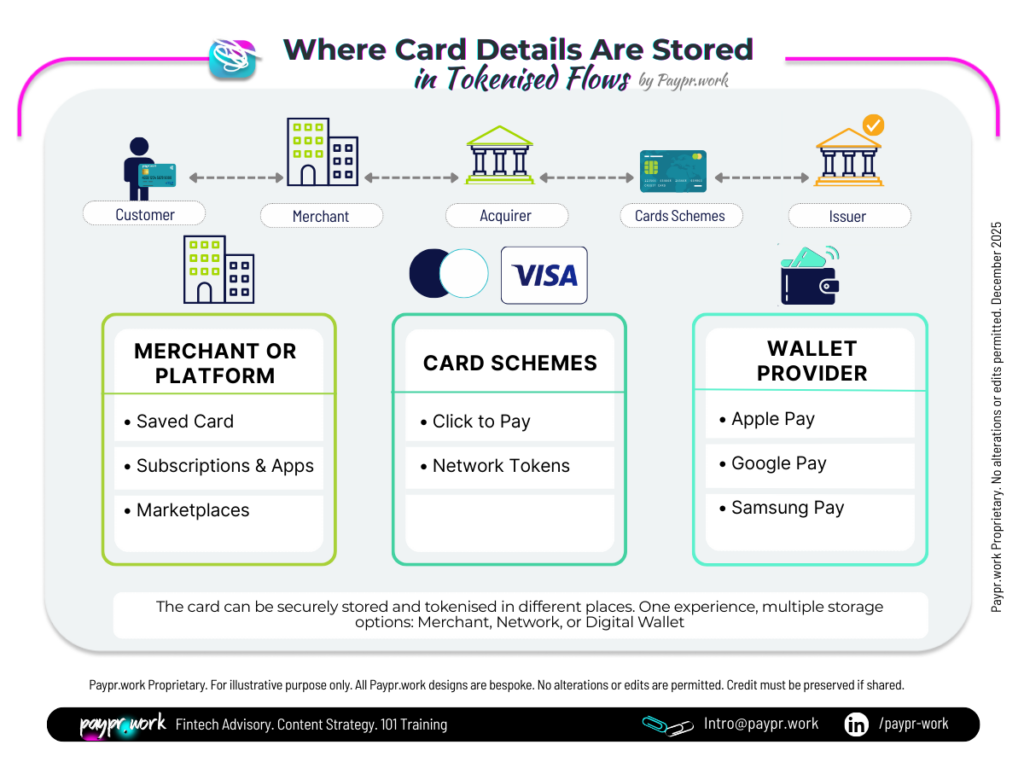
🔘 Stored with the merchant or platform
This is when the card is saved inside an account with a business or an app. This includes saved-card buttons, express checkout, subscriptions, repeat billing, marketplaces or super-apps. This can be managed by the merchant’s payment provider, as well as hybrid setups where a merchant token sits on top of a network token.
From the customer’s point of view, it simply feels like the card is saved with a specific business.
🔘 Stored with the card networks
Here, the card is stored centrally by the card networks such as Visa or Mastercard, rather than by a single merchant. This includes Click to Pay, network-managed tokens, etc.
The same stored card can be used across multiple businesses, not just one.
🔘 Stored in a digital wallet
The card lives inside a device or app-based wallet. This includes Apple Pay, Google Pay, Samsung Pay, and device-bound wallet tokens.
In this case, the token belongs to the wallet or device rather than the website.
Much of the change happening this year is linked to the gradual shift to token-first processing across all the different ways cards are stored.
▪️Click to Pay is moving to a newer, token-based version to protect card details and reduce failed payments. Older implementations will be switched off as of the end of this month.
▪️Token lifecycle visibility continues to improve, driven by scheme updates, wallet changes, and provider roadmaps we’re seeing across the ecosystem. This means fewer failures when a card expires, is replaced, or changes, because the token can update without the customer re-entering their card details. We’re also seeing better tools and notifications around token creation, suspension, replacement, and expiry, which should help reduce payment failures and recovery friction.
▪️ Integration with wider payments change
Some of the developments around tokens sit alongside other industry changes, such as the richer data standards ISO 20022 and stronger risk and security controls. They work in the same direction and help support better routing, clearer transaction information, and stronger authentication across payment flows.
👉🏽 #Paymentexperts, anything to add on #tokens codes 🎙️?
—
𝘐𝘧 𝘺𝘰𝘶’𝘳𝘦 𝘭𝘰𝘰𝘬𝘪𝘯𝘨 𝘵𝘰 𝘤𝘰𝘯𝘯𝘦𝘤𝘵 𝘵𝘩𝘦 𝘥𝘰𝘵𝘴 𝘢𝘤𝘳𝘰𝘴𝘴 𝘺𝘰𝘶𝘳 𝘪𝘯𝘧𝘳𝘢𝘴𝘵𝘳𝘶𝘤𝘵𝘶𝘳𝘦 𝘢𝘯𝘥 𝘥𝘦𝘧𝘪𝘯𝘦 𝘢 𝘴𝘵𝘳𝘢𝘵𝘦𝘨𝘺 𝘵𝘩𝘢𝘵 𝘵𝘳𝘶𝘭𝘺 𝘴𝘶𝘱𝘱𝘰𝘳𝘵𝘴 𝘺𝘰𝘶𝘳 𝘨𝘰𝘢𝘭𝘴, 𝘸𝘦 𝘤𝘢𝘯 𝘩𝘦𝘭𝘱. 𝘓𝘦𝘵’𝘴 𝘵𝘢𝘭𝘬.
👉 intro@paypr.work
👉 www.paypr.work
Paypr.work [ˈpeɪpəwəːk] Merchant Hub: Merchant Voice, Amplified! #payment #paymentstrategy